
History of the Title “Custodian of the Two Holy Mosques”
By Ausaf Sayeed 3/23/25
Dr. Ausaf Sayeed (b. September 18, 1963) is a former career diplomat and Ambassador from the Indian Foreign Service (IFS), having served the Ministry of External Affairs, Government of India, for nearly 34 years. He has held various leadership roles throughout his tenure, contributing significantly to India’s diplomatic, political, and economic engagements across the globe. He served as India’s Ambassador to the Kingdom of Saudi Arabia and Yemen, High Commissioner of India to Seychelles and Consul General of India in Chicago and Jeddah, besides serving in Egypt, Qatar and Denmark. He dedicated 18 years of his career to the Middle East, with ten years spent in various capacities in Saudi Arabia.
This article was first published on West Asia Review, Dr. Sayeed’s blog dedicated to analyzing the current affairs of the Middle East. You can view the article at https://westasiareview.com/.
Introduction
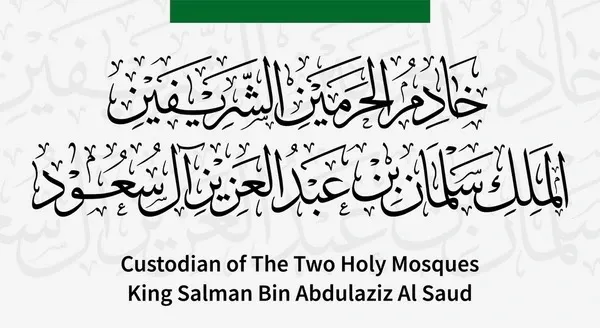
The cities of Makkah and Madinah hold unparalleled religious significance for Muslims worldwide. Makkah is home to the Kaaba (Al-Haram Mosque), the holiest site in Islam and the focal point of the annual Hajj pilgrimage, while Madinah houses the Prophet’s Mosque (Al-Masjid an-Nabawi), the second holiest site and the final resting place of Prophet Muhammad. The title “Custodian of the Two Holy Mosques” (خَادِمُ ٱلْحَرَمَيْنِ ٱلشَّرِيفَيْنِ – Khādim al-Ḥaramayn aš-Šarīfayn), which translates to “Servant of the Two Noble Sanctuaries” or “Protector of the Two Holy Cities,” carries profound religious and political significance, symbolising stewardship over Islam’s two holiest sites. It is a prestigious designation that signifies the holder’s profound responsibility for the safeguarding, maintenance, and overall well-being of these sacred sites and the millions of pilgrims who visit them annually.
Early Historical Context of Guardianship
Even before the formal adoption of the specific title “Custodian of the Two Holy Mosques,” the fundamental concept of guardianship and service to the holy sites of Makkah and Madinah was inherent in the authority and responsibilities of early Islamic leaders. As the successors of Prophet Muhammad, the early Caliphs naturally held a position of paramount authority over these cities. For instance, the Rashidun Caliphs, in the initial decades after the Prophet’s passing, oversaw the nascent Islamic state’s expansion and the organisation of the burgeoning pilgrimage to Makkah while also ensuring the upkeep of the mosques in both holy cities.
In the centuries that followed the early Caliphate, as the vast Islamic empire grew and subsequently fragmented into various regional powers, the direct responsibility for the holy cities often fell to local leaders and communities. These entities played a crucial role in the maintenance and protection of the sacred sites, ensuring their continued accessibility for worship and pilgrimage. This period saw the gradual emergence of a need for a more formalised title that would explicitly denote this vital responsibility, particularly as different Islamic dynasties rose and fell, each seeking to assert their legitimacy and influence within the Islamic world. The power dynamics between central Islamic authorities, such as the Abbasid Caliphate, and regional rulers significantly influenced the adoption and usage of titles connected to Makkah and Madinah, with both seeking to leverage the religious prestige associated with these sites. The underlying principle of caring for the holy sites remained a constant throughout Islamic history, with the formal title appearing as a more distinct articulation of this enduring duty as political landscapes transformed.
Pre-Saudi Usage of the Title
The Ayyubid Dynasty (1171–1250):
The first historical figure believed to have used the title “Custodian of the Two Holy Mosques” is Sultan Saladin ( صلاح الدين الأيوبي ) (r. 1171–1193) of the Ayyubid dynasty. Saladin rose to prominence in the latter half of the 12th century, establishing the Ayyubid Sultanate, which encompassed Egypt, Syria, and parts of Arabia. His reign was marked by significant events, most notably his role in the Crusades and the recapture of Jerusalem from the Christian forces. Given his extensive territorial control and growing stature as a leading figure in the Islamic world, Saladin’s adoption of the title in the 12th century likely enhanced his standing further and projected an image of leadership and piety that resonated across the Muslim lands. By associating himself with the guardianship of Islam’s holiest sites, Saladin aimed to unify support for his campaigns against the Crusaders and consolidate his authority as a defender of the faith.
The Mamluk Sultanate (1250–1517):
Following the Ayyubids, the Mamluk Sultanate of Egypt held the title “Custodian of the Two Holy Mosques” for over two and a half centuries. The Mamluks, a military class that eventually seized control of Egypt, extended their power into the Hejaz region, which includes Makkah and Madinah, particularly after the mid-14th century. Their dominance in the region was divided into two main periods: the Baḥrī Mamluks (1250–1382) and the Burjī Mamluks (1382–1517). As the preeminent power in the region, the Mamluk Sultans utilised the title to legitimise their rule over the Hejaz and to underscore their commitment to the Islamic holy sites. Control over Makkah and Madinah was a significant source of prestige and religious authority in the medieval Islamic world, and the Mamluks, many of whom were of non-Arab origin, likely adopted the title to solidify their position as defenders of the faith and caretakers of its most sacred places. Several prominent Mamluk Sultans are known to have used this title, including Baibars (r. 1260–1277), Qalawun (r. 1279–1290), and Qaitbay (r. 1468–1496). These rulers often invested in the infrastructure and maintenance of the holy sites, further cementing their claim to the title.
Table 1: Prominent Mamluk Sultans as Custodians of the Two Holy Mosques
Sultan | Reign Period | Relationship with Makkah and Madinah |
Baibars | 1260–1277 | He instituted the khutbah in the name of the Mamluk sultan in Mecca. |
Qalawun | 1279–1290 | He was known for his piety and endowments towards religious institutions in the holy cities. |
An-Nasir Muhammad | 1293–1294, 1299–1309, 1310–1341 | His long reign saw significant attention paid to the security and well-being of pilgrims. |
Qaitbay | 1468–1496 | He undertook extensive renovations and expansions of the holy mosques in both Makkah and Madinah, leaving a lasting architectural legacy. |
Qansuh al-Ghawri | 1501–1516 | His reign preceded the Ottoman conquest and marked a period of continued Mamluk control over the holy sites. |
The Ottoman Era (1517–1924):
The Ottoman Empire, which succeeded the Mamluks as the dominant Islamic power in the region, adopted and consistently used the title “Custodian of the Two Holy Mosques” following their conquest of the Mamluk Sultanate in 1517. A significant act in this transition was Sultan Selim I (r. 1512–1520) choosing the title “Servant of the Two Sanctuaries” (Ḫādimü’l-Ḥaremeyn) rather than the more assertive “Ruler of the Two Sanctuaries” (Ḥākimü’l-Ḥaremeyn). This choice of “Servant” over “Ruler” likely reflects a deliberate effort to emphasise humility and religious devotion in the context of the holy sites, potentially aimed at gaining greater acceptance and legitimacy as a non-Arab ruler of the Arab heartland. The title “Servant” carries a strong connotation of piety and submission to a higher authority, positioning the Ottoman Sultans as caretakers rather than absolute monarchs of the most sacred places in Islam. All subsequent Ottoman Sultans, until the abolition of the Caliphate in 1924, claimed this prestigious title.
The Ottoman Empire’s consistent use of the title for over four centuries solidified its association with the major Islamic Caliphate of the time and reinforced the Sultan’s role as a leading figure in the Muslim world. The longevity of Ottoman rule and their continuous claim to the title created a strong historical precedent and a widely recognised symbol of custodianship. While the Ottomans exerted overall political control over the Hejaz, the local Sharifs of Mecca often maintained a degree of autonomy in administering the holy cities. Notable Ottoman Sultans who held the title include Suleiman I (r. 1520–1566), Murad III (r. 1574–1595), Abdul Hamid II (r. 1876–1909), and Mehmed V (r. 1909–1918). Like their Mamluk predecessors, the Ottoman Sultans often undertook significant architectural projects and provided patronage to the holy sites, further underscoring their role as custodians.
The Ottoman Empire faced challenges during the rise of the First Saudi State (1744–1818), which rejected Ottoman suzerainty and emphasised direct guardianship of Islamic principles. The Saudi-Ottoman rivalry culminated in the Ottoman-Egyptian destruction of Diriyah in 1818, temporarily reasserting Ottoman authority. Nevertheless, the title’s legitimacy waned as Ottoman influence fragmented in the 19th century, particularly after the British-backed Arab Revolt (1916–1918) led by Sharif Hussein bin Ali, who briefly claimed the title before losing control to Ibn Saud in 1925.
Table 2: Notable Ottoman Sultans as Custodians of the Two Holy Mosques
Sultan | Reign Period | Relationship with Makkah and Madinah |
Selim I | 1512–1520 | First Ottoman Sultan to adopt the title after conquering the Mamluks in 1517; notably chose the title “Servant” over “Ruler” . |
Suleiman I | 1520–1566 | Oversaw significant development and maintenance of the holy sites during the golden age of the Ottoman Empire. |
Murad III | 1574–1595 | His reign saw continued Ottoman attention to the administration and upkeep of Makkah and Madinah. |
Abdul Hamid II | 1876–1909 | A politically significant figure who emphasized the Ottoman Caliphate’s role as the leader of the Muslim world, with custodianship of the holy sites being a key aspect of this claim. |
Mehmed V | 1909–1918 | His reign coincided with the decline of the Ottoman Empire and the lead-up to the Arab Revolt, which ultimately challenged Ottoman control over the Hejaz. |
The Sharifate of Mecca (c. 967–1925):
For centuries, the Sharifs of Mecca held a crucial position as the traditional stewards and local rulers of the holy cities. Their lineage, tracing back to Prophet Muhammad through his grandson Hasan ibn Ali, provided them with significant religious legitimacy. Their responsibilities included protecting the cities, ensuring the safety and well-being of pilgrims, and maintaining the sanctity of the holy sites. The title “Sharif” itself signifies “noble” or “highborn”. The Sharifs navigated complex relationships with the various Islamic empires that held suzerainty over the Hejaz, including the Abbasids, Fatimids, Ayyubids, Mamluks, and Ottomans. Notably, when the Ottoman Sultans assumed the title of Custodian, they generally confirmed the Sharifs in their position as Emirs of Mecca, indicating a shared, albeit hierarchical, responsibility for the holy cities.
While the larger empires formally held the title of “Custodian,” the Sharifs of Mecca acted as continuous local custodians due to their esteemed lineage and long-standing authority in the region, making them pivotal figures in the history of Makkah and Madinah. Their direct connection to Prophet Muhammad gave them considerable religious legitimacy in the eyes of the local population and pilgrims, rendering their role as stewards essential regardless of the overarching political power. Historical records suggest that the title “Custodian of the two holy cities” was indeed used by the Sharif of Mecca.
The Title in the Kingdom of Saudi Arabia
The Unification of Saudi Arabia and the Holy Cities (1902–1932):
The establishment of the Third Saudi State under Abdulaziz Ibn Saud marked a new chapter in the history of the holy cities. Beginning with the recapture of Riyadh in 1902, Abdulaziz embarked on a campaign to unify the Arabian Peninsula. This endeavour culminated in the control over the Hejaz, including Makkah and Madinah, by 1925. The formal unification of these territories into the Kingdom of Saudi Arabia occurred in 1932. This unification brought the holy cities under the direct rule of a single Arab power for the first time in centuries, creating a new context for the adoption and use of the “Custodian” title. The rise of the Saudi state, following the decline of the Ottoman Empire and a brief period of control by the Hashemite Kingdom of Hejaz, represented a significant shift in the political landscape of the Arabian Peninsula and the governance of its holiest sites.
The modern Saudi adoption of the title began indirectly under King Faisal (1964–1975), who inscribed “Custodian of the Two Holy Mosques” on the Kaaba’s Kiswa to avoid personal glorification. However, King Fahd bin Abdulaziz(1982–2005) formally revived the title in 1986, replacing “His Majesty” to emphasise Islamic stewardship over secular authority. This shift aligned with Saudi Arabia’s growing role as a global Islamic leader, particularly after the 1979 Iranian Revolution and the Grand Mosque seizure, which heightened the Kingdom’s focus on religious legitimacy.
Subsequent monarchs retained the title:
King Abdullah (2005–2015) upheld it, rejecting honorifics like “King of Hearts” to maintain religious humility. King Salman (2015–present) has further institutionalised the title, linking it to initiatives such as Vision 2030’s cultural and economic reforms. Interestingly, King Khalid (1975–1982) did not adopt the title. His reign, marked by regional turmoil and the 1979 Grand Mosque crisis, focused on consolidating internal stability rather than symbolic rebranding. The title’s absence during his rule reflects a transitional period before its formalisation under King Fahd.
Strategic and Symbolic Significance of the Title
The title “Custodian of the Two Holy Mosques” remains a cornerstone of Saudi Arabia’s Islamic legitimacy and geopolitical strategy, anchoring its role as the guardian of Islam’s holiest sites: the Grand Mosque in Makkah and the Prophet’s Mosque in Madinah. In the modern era, this designation has transcended ceremonial symbolism to become a strategic asset in regional power struggles, particularly as rivals such as Turkey and Iran vie for influence within the Islamic world. Saudi custodianship of the holy sites grants the Kingdom unparalleled religious authority, positioning it as the de facto leader of Sunni Islam.
The title “Custodian of the Two Holy Mosques” bridges medieval Islamic governance and modern statecraft. From Ayyubid origins to Ottoman ceremonialism and Saudi revitalisation, it has served as a potent symbol of Islamic stewardship. As the Kingdom navigates 21st-century challenges, the title remains a linchpin of its identity, intertwining its historical legacy with visions of future leadership.
(Image Credits: West Asia Review)