
Trump, Netanyahu: A Widening Gulf in Policy
By Ausaf Sayeed 6/4/25
Dr. Ausaf Sayeed (b. September 18, 1963) is a former career diplomat and Ambassador from the Indian Foreign Service (IFS), having served the Ministry of External Affairs, Government of India, for nearly 34 years. He has held various leadership roles throughout his tenure, contributing significantly to India’s diplomatic, political, and economic engagements across the globe. He served as India’s Ambassador to the Kingdom of Saudi Arabia and Yemen, High Commissioner of India to Seychelles and Consul General of India in Chicago and Jeddah, besides serving in Egypt, Qatar and Denmark. He dedicated 18 years of his career to the Middle East, with ten years spent in various capacities in Saudi Arabia.
This article was first published on West Asia Review, Dr. Sayeed’s blog dedicated to analyzing the current affairs of the Middle East. You can view the article at https://westasiareview.com/.
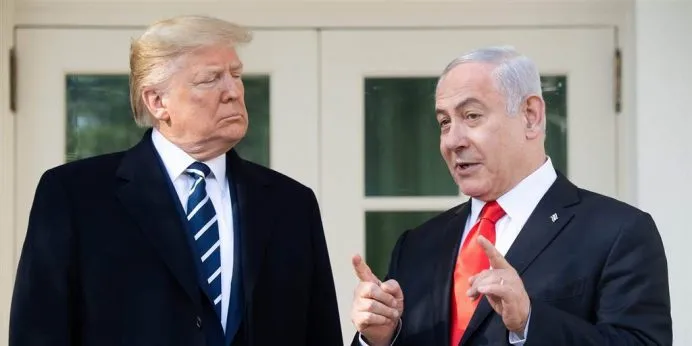
The once-robust partnership between U.S. President Donald Trump and Israeli Prime Minister Benjamin Netanyahu is fracturing into a complex rift, marked by deepening policy disagreements, personal distrust, and diverging strategic priorities. While the broader U.S.-Israel alliance remains intact, the collision of Trump’s transactional “America First” doctrine with Netanyahu’s inflexible security agenda has created unprecedented tensions, particularly regarding Iran, Gaza, regional diplomacy, and economic relations.
During Trump’s first presidency (2017–2021), the two leaders were viewed as close ideological allies. Trump’s pro-Israel actions—recognizing Jerusalem as Israel’s capital, moving the U.S. embassy, and supporting Israeli sovereignty over the Golan Heights—were utilized by Netanyahu for domestic advantage and earned Trump recognition as a friend of Israel.
Their early alignment was rooted in mutual opposition to the Iran nuclear deal (JCPOA), from which Trump withdrew in 2018. Both advocated maximum pressure on Iran and celebrated the Abraham Accords, normalizing Israel’s relations with several Arab states, including the UAE and Bahrain. At that stage, their partnership appeared unshakeable.
However, frictions emerged after Netanyahu congratulated Joe Biden in 2020, which Trump perceived as a sign of disloyalty. Tensions escalated during Trump’s second term, driven by differing strategic visions. Trump fostered closer ties with Gulf States (Saudi Arabia, Qatar, UAE), securing over $2 trillion in economic collaborations, including $183 billion in defense deals. The resumption of talks for F-35 exports with these nations raised Israeli concerns about its military edge. Notably, Israel was excluded from Trump’s itinerary, reflecting a U.S. shift toward economic priorities over traditional alliances and leaving Israel feeling isolated.